Our planet is facing an unprecedented and accelerating biodiversity crisis, driven by human activity and compounded by climate change, which is bringing ever more severe weather to a world already strained by poverty and inequality.
At World Trade Organization (WTO), the key characteristic according to which support to agricultural producers is classified is their ability to distort international trade rather than their incidence and impacts on social or environmental dimensions.
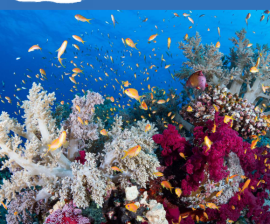
Assessments of coral reef biodiversity generally focus on corals and fishes, although there is a variety of other taxa that live within the structure of coral reefs.
Marking 60 years of The IUCN Red List of Threatened Species (IUCN Red List), this report captures its beginnings and tracks key milestones and achievements.
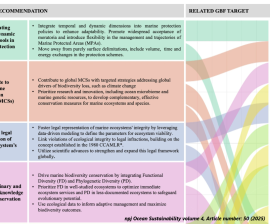
Marine ecosystems face threats from human-induced stressors like climate change, pollution, and habitat loss. Despite international endeavors, significant gaps remain in understanding ocean dynamics.
Acknowledging the diversity of forest contexts and the need for tailored approaches, this chapter examines the policy instruments that can operationalize a differentiated forest-climate agenda to achieve conservation and restoration outcomes.
The Kunming-Montréal Global Biodiversity Framework (GBF) recognizes that durable conservation outcomes cannot be achieved without the rights, leadership, and knowledge of Indigenous Peoples, Afro-descendant Peoples, and local communities.
Nature is the foundation of life on Earth, underpinning the ecosystem services that sustain societies and economies. Yet, its degradation continues at an alarming rate, threatening planetary resilience and human well-being.