Context. Traditional Ecological Knowledge (TEK) is lost due to the increase of urbanisation, and the lack of transfer of this knowledge to younger generations. Aims.
In the early 1980s Spring’s report on marine turtle species distribution indicated there were 6 species of turtles that could be found in PNG water including the green, hawksbill, leatherback, loggerhead, olive ridley and the flatback turtles.
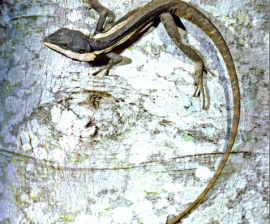
There are 102 species of reptiles and 25 species of frogs known from the Trans-fly region. 29 of the reptiles and one of the frogs are of special conservation concern. Seven of these species are of high conservation concern: 2 turtles, a monitor lizard, three snakes, and one frog.
This Policy on Protected Areas (the Policy) has been developed by the Government of Papua New Guinea to support the development and management of a National Protected Area Network in Papua New Guinea (PNG).
Papua New Guinea contains more than 7% of the world's biodiversity in less than 1% of the land area. PNG has more than 18,894 described plant species, 719 birds, 271 mammals, 227 reptiles, 266 amphibians and 341 freshwater fish species.
This report presents the results of the 2016 Funafuti Community-Based Ridge-to-Reef (R2R) Rapid Biodiversity Assessment (BIORAP) of biodiversity and ecosystem services (BES), hereafter referred to as the BIORAP.
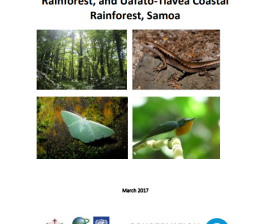
A Biological Rapid Assessment Program (BIORAP) was conducted from July 16 to August 3, 2016 in three Key Biodiversity Areas (KBAs) in Samoa: the Central Savai’i Rainforest KBA, and the Falealupo Peninsula Coastal Rainforest KBA on Savaii; and the Uafato-Tiavea Coastal Rainforest KBA on Upolu.
The Biological Rapid Assessment Programme (BIORAP) is a biological survey based on a concept developed by Conservation International and designed to use scientific information to catalyse conservation action.
his BIORAP (Biological Rapid Assessment Program) survey was undertaken as part of the process to facilitate improved management of the forests and biodiversity of Upland Savaii.