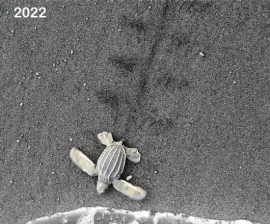
The marine turtle states review for Solomon Islands 2022 was commissioned to inform the development of the country's 5-year National plan of Action (NPOA) - Marine Turtles 2022-2026.
Fiji and other Pacific Island Countries face a high risk of communicable disease outbreaks caused by endemic, emerging and re-emerging disease, which are influenced by social, economic and ecological changes.
This guideline provides practical, science-based information for tourism operators and tourism regulators who want to offer the best possible experience to their customers, while conserving species and habitats and making a positive contribution to local communities.
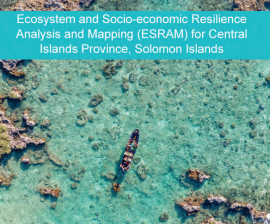
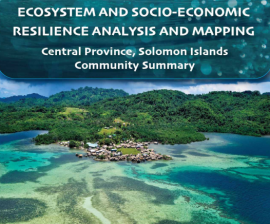
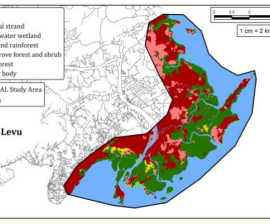
The target area for the ESRAM assessment is the land- and seascape comprising Nggela Islands, Russell Islands and Savo Island. This is largely due to the very high biodiversity values of their terrestrial and marine areas.
This publication is a simplified summary version of the report ‘Ecosystem and Socio-economic Resilience Analysis and Mapping (ESRAM) for Central Province, Solomon Islands’.
This report presents the findings of an expedition conducted under the Fiji MESCAL programme at the demonstration site: the Rewa River mangroves. The expedition team carried out surveys of the area’s biodiversity, cultural and archaeological heritage and its socioeconomic profile.
The world’s more than 200 000 protected areas come in many forms, on land and at sea, and occur in every country (Bertzky et al. 2012). They are places that people establish to conserve natural and cultural heritage and to sustain their benefits for society.
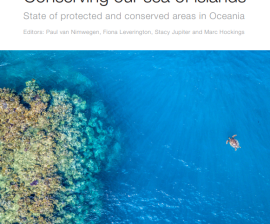
Conserving our sea of islands: State of protected and conserved areas in Oceania report is the first comprehensive regional assessment of protected and conserved areas.
Understanding the state and value of the world’s wetlands The Global Wetland Outlook 2025 presents a synthesis of scientific information on the value of the world’s wetlands, the costs to society due to wetland loss and degradation and the scale of investment needed to restore wetlands.
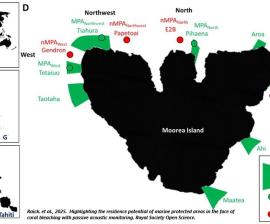
Marine Protected Areas (MPAs) can increase the resilience of reef communities to disturbances, playing a role in sheltering biodiversity from climate-related impacts.