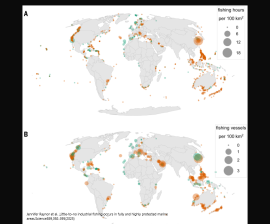
There is a widespread perception that illegal fishing is common in marine protected areas (MPAs) due to strong incentives for poaching and the high cost of monitoring and enforcement.
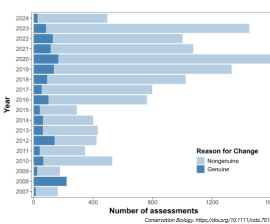
Despite the increasing number of species assessed for extinction risk by the International Union for Conservation of Nature (IUCN) (163,040 species as of 2024), only about 1 in 1,000 have been downlisted due to genuine population improvement.
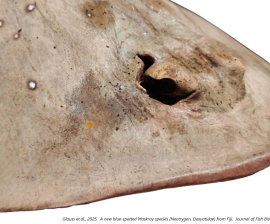
Neotrygon romeoi n. sp. (Dasyatidae), a new species of blue-spotted maskray from Fiji, previously confused with Neotrygon kuhlii (Müller and Henle 1841) or Neotrygon trigonoides (Castelnau 1873), is described based on nine specimens (310–397 mm disc width) from Fiji.
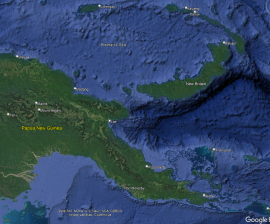
Papua New Guinea (PNG) is home to one of the largest mangrove habitats (6% of the world’s mangrove area), which plays a crucial role in coastal protection, carbon sequestration and supporting biodiversity and livelihoods.
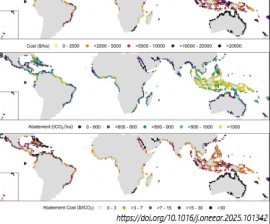
Mangroves provide numerous ecosystem services and are increasingly recognized as a natural climate solution. As a result, multiple recent initiatives have set ambitious mangrove restoration targets.
This guidance aims to inform the planning, design, and implementation of new and expanded MPAs, OECMs, areas conserved by Indigenous peoples, and networks of protected and conserved areas at the community, national, and international levels.
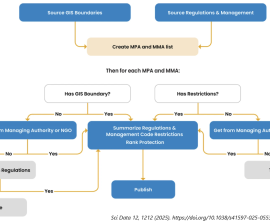
Comprehensive, global, and standardized data on ocean regulations are essential to assess protection levels. They are also key to successfully measuring progress towards 30 × 30 goals.
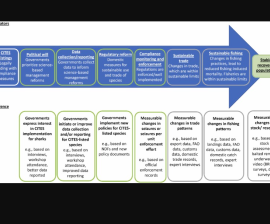
International wildlife trade contributes to the loss of biodiversity and has driven several terrestrial and aquatic species to extinction. Sharks and rays are some of the most threatened vertebrates, with overfishing considered the primary threat causing substantial global population declines.
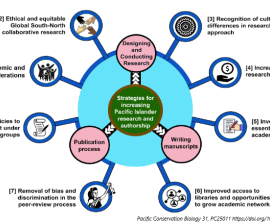
Disseminating research through academic publishing is essential for contributing to global knowledge, advancing critical fields and finding solutions to humanity’s challenges.