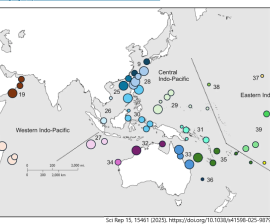
Documentation of biodiversity and its geographical distribution is necessary to understand the processes and drivers of evolutionary diversification as well as to guide conservation and management initiatives.
Maninita, the southernmost island of the Vava'u group is an important seabird nesting site and a proposed national protected area as originally identified by the Government of Tonga's Ministry of Lands, Survey and Natural Resources.
Principles for designing marine protected area (MPA) networks that address social, economic, and biological criteria are well established in the scientific literature.
The evaluation of management effectiveness is generally achieved by the assessment of series of criteria (represented by carefully selected indicators) against agreed objectives or standards.
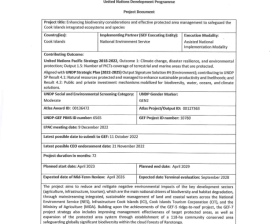
Official project document for the Cook Islands national project under GEF-7 programming, project title: Enhancing Biodiversity considerations and effective protected area management to safeguard the Cook Islands integrated ecosystems and species. Annexes not in
This document represents a synthesis of the expertise, knowledge and views of leading experts in marine protected area (MPA) network design and implementation. It is intended to be useful to countries and their various organizations in helping them build effective networks of MPAs.