The application of remote sensing methods to detect invasive plant species was heavily reliant on species ecology, extent of invasion and available geospatial and remotely sensed image data. Call Number: [EL]Physical Description: 19 p.
The Pacific BioScapes Programme aims to strengthen the protection of key coastal ecosystems that support climate resilience, livelihoods and the human wellbeing of over 30,000 people in the Central Islands Province of the Solomon Islands.
The Pacific BioScapes Programme is providing support to develop new Regional Marine Tourism Guidelines that incorporate best practice engagement for the environment and marine species.Physical Description: 1 p.
Many people are familiar with the idea of a protected area—land or water areas set aside and kept as natural as possible, such as national parks and nature reserves. Protected areas are one of the most well-established conservation tools, playing a crucial role in protecting biodiversity.
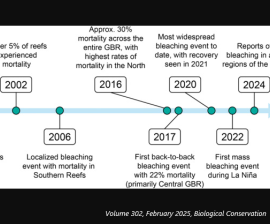
Predicting coral bleaching events has been key to reef conservation management efforts. Current satellite-based bleaching prediction tools offer effective regional-scale alerts of bleaching risk, but lack reliability at the reef-scale.
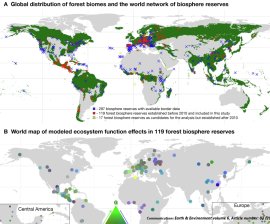
UNESCO biosphere reserves serve as learning areas for sustainable development, where preserving ecosystem functionality is an imperative. However, this critical assumption has yet to be thoroughly examined.
Traditional Ecological Knowledge (TEK) is lost due to the increase of urbanisation, and the lack of transfer of this knowledge to younger generations. Aims.
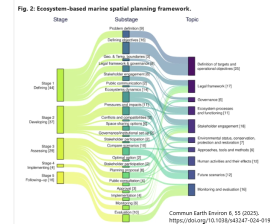
Ecosystem-based marine spatial planning is an approach to managing maritime activities while ensuring human well-being and biodiversity conservation as key pillars for sustainable development.