Conflict and conservation focuses on armed conflict and nature. The theme is highly timely as armed conflicts cause great economic and social harm, as well as environmental damage around the world.
In 2021, IUCN launched the IUCN Flagship Report Series, to help demonstrate the importance of conserving nature for human well-being and all life on Earth. This report, the second in the series, focuses on agriculture and nature.
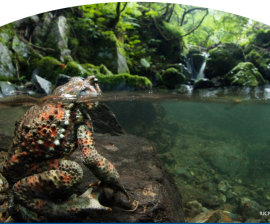
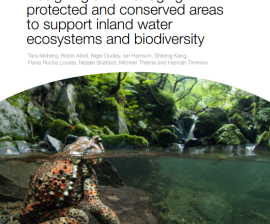
Inland waters – such as rivers, lakes and other wetlands – are among the most biodiverse ecosystems on the planet. They are also the most threatened; almost one in three species is at risk of extinction and monitored populations of freshwater species have declined by 85% since 1970.
Natural ecosystems slow the rate of climate change by sequestering and storing greenhouse gases. They also help us adapt to changes by providing a variety of ecosystem services, supporting food and water security, disaster risk reduction and human health.
The international community has made some headway on pledges to protect 30% of the Earth by 2030 but progress must accelerate, the official progress report from the UN Environment Programme World Conservation Monitoring Centre (UNEP-WCMC) and the International Union for Conservation of Nature (IU
Territories and areas conserved by Indigenous peoples and local communities (IPs and LCs), abbreviated as ‘ICCAs’ (Glossary), are defined by the International Union for Conservation of Nature (IUCN) as “natural or modified ecosystems including significant biodiversity, ecological services and cul
This is the first volume in the WCPA Good Practice Guidelines that is predominantly by rangers and for rangers. The editors worked with partners to collect good practices and stories from rangers worldwide, reflecting global experience and lessons learned.
The global race to safeguard irreplaceable ecosystems is nearing a critical threshold, and the window to protect vital areas for climate stability, biodiversity, and human wellbeing is rapidly closing.
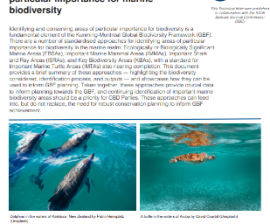
Identifying and conserving areas of particular importance for biodiversity is a fundamental element of the Kunming-Montreal Global Biodiversity Framework (GBF).