This strategy provide board strategic guidance for nature conservation planning, prioritisation, and implementation in our region. Call Number: [EL]Physical Description: 1 p.
The Pacific Islands Regional Marine Species Programme (2022-2026) is a regional strategy for the cooperative conservation and management of dugongs, marine turtles, whales and dolphins, sharks and rays, and seabirds.
The PNG Conservation and Environment Protection Authority will be assisted to raise awareness of the threats to sea turtle species in Papua New Guinea through a major turtle protection public awareness campaign in districts where illegal or excessive turtle take is occurring.
A Management Plan for the O Le Pupu-Pu'e National park was first formulated in 1981 and has not been revised since then. Circumstances for park management have changed significantly and some sections of the Management plan are now out of date.
The Pacific BioScapes Programme is supporting capacity in the Pacific to determine that the presence and population of key seabird biodiversity is enhanced as envisaged in the draft Regional Seabird Action Plan 2022-2026.Call Number: [EL]Physical Description: 1 p
The Critical Ecosystem Partnership Fund (CEPF) is designed to safeguard the world's biodiversity hotspots. CEPF is a joint initiative of Conservation International, l'Agence Française de Développement, the Global Environment Facility, the Government of Japan, the John D. and Catherine T.
Known as Koroliko in Vanuatu, wedge-tailed shearwaters are a common seabird that forages over wide areas of the Pacific Ocean. Unfortunately seabirds such as these are known to ingest plastics. Call Number: [EL]Physical Description: 1 p.
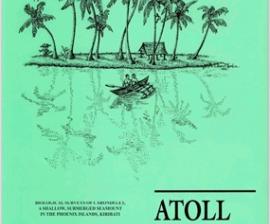
Carondelet is a remote seamount in the Phoenix Islands of the Republic of Kiribati. Earlier expeditions of the Phoenix Islands Protected Area (PIPA) were not able to survey the seamount due to challenging ocean conditions.
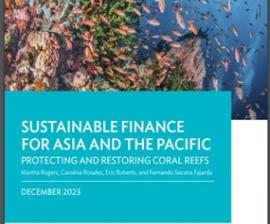
The Asian Development Bank (ADB) and The Nature Conservancy (TNC) are focused on identifying innovative ways to effectively protect and restore critical ecosystems, such as coral reefs, in Asia and the Pacific.