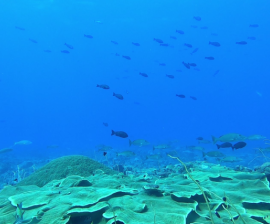
Since 2023, the Palau International Coral Reef Center (PICRC) has been collaborating with the Koror State Government (KSG) to conduct research and monitoring aimed at providing essential baseline data to guide the Koror Southern Lagoon Coastal Fisheries Management Plan, a new fisheries management
The interlinked crises of climate change and biodiversity loss are slipping down political agendas just as geopolitical instability and fiscal pressures rise.
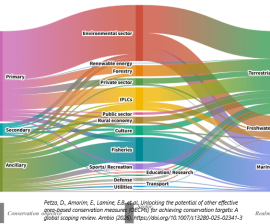
Other Effective Area-based Conservation Measures (OECMs), introduced by the Convention on Biological Diversity (CBD), refer to areas outside formal protected-area networks that deliver effective and enduring in situ biodiversity conservation.
Nurturing people-nature relationships in evolving social-ecological landscapes can slow biodiversity loss and build resilient communitiesBiodiversity loss is often framed as a failure of conservation. In reality, it is a failure of relationships.
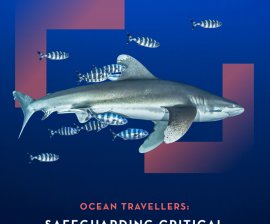
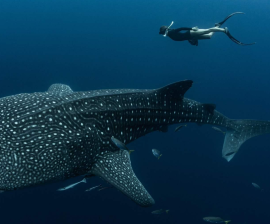
Sharks and rays are among the most threatened vertebrates on the planet, facing intense pressure from overfishing, habitat loss and degradation and inadequate protection across critical sites for life-history processes and their migratory ranges.
The loss of biodiversity is accelerating globally, and there is growing recognition that both halting and reversing this loss requires action from all of society, in addition to governments, civil society organisations, Indigenous peoples, local communities and the private sector.
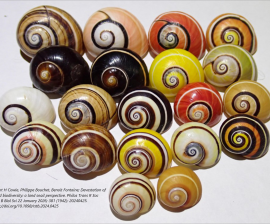
Many islands are remote and the level of interest in land snails as a component of the global biodiversity conservation agenda is low. The conservation status of many island land snail faunas thus remains at best out of date.
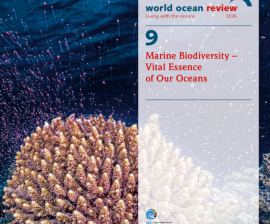
Life on Earth is linked inseparably with the ocean. It covers around 71 per cent of the surface and is the largest habitat on our planet. Much of its species diversity is still unknown – and yet it is vital for human well-being.
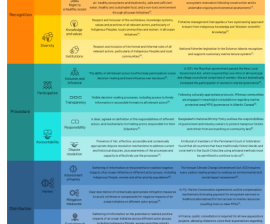
The ocean is essential for humanity1,2,3. Yet, inequity in ocean-based activities is widespread and accelerating4,5,6,7,8. Addressing this requires governance approaches that can systematically measure equity and track progress9.
Research from Pew marine fellows is a critical resource for helping to protect large ocean species and can offer invaluable input as a network of high seas marine protected areas (MPAs) nears reality.