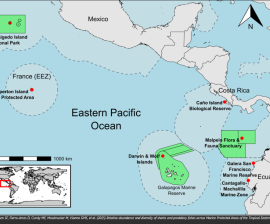
Marine Protected Areas (MPAs) in the Tropical Eastern Pacific (TEP) support globally distinct reef fish populations, which exhibit differences between the remote oceanic islands and continental coast.
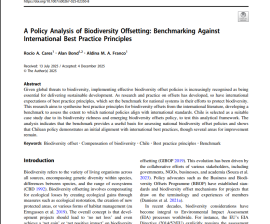
Given global threats to biodiversity, implementing effective biodiversity offset policies is increasingly recognised as being essential for delivering sustainable development.
COP30 has come and gone, leaving behind a familiar mix of new commitments and renewed political promises. But amid the declarations of progress, one issue that received almost backhanded attention is the quiet abandonment of conservation projects after their high-profile launches.
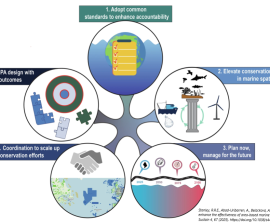
New research suggests that the rapid expansion of protected areas worldwide is giving a misleading picture of progress, with biodiversity continuing to decline inside many sites designated for protection.
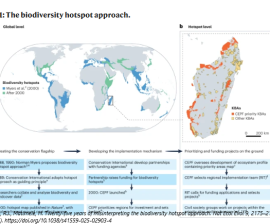
A quarter of a century after its publication, the biodiversity hotspot concept remains one of the most cited and influential frameworks in conservation science.
Area-based conservation has long been a cornerstone of efforts to conserve species and habitats, safeguard and enhance nature’s contributions to people, 1and improve the resilience of land and seascapes to climate change (Zeng et al. 2022; Brodie et al. 2023; Duncanson et al.
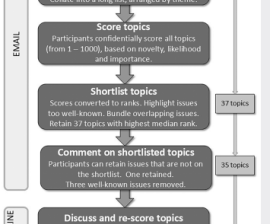
We present outcomes from our 17th horizon scan of issues potentially impacting global biodiversity conservation in the next decade. Issues are novel, or represent a significant step-change in impact, and are currently not well-known or understood within the conservation community.
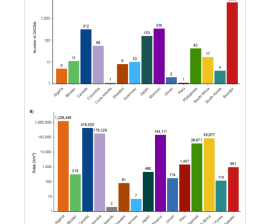
Other effective area–based conservation measures (OECMs) are anticipated to play an important role in progress towards global protection targets, with progress being judged on the basis of the areas reported to the World Database on Other Effective area-based Conservation Measures (WD-OECM).
Delivering both social and ecological outcomes is regarded as essential for conservation actions to be effective, particularly in regions where Indigenous Peoples (IPs) and local communities (LCs) depend heavily on natural resources.