In the upland forests of Vanua Levu and Taveuni in Fiji, a remarkable and largely unknown form of agriculture has been unfolding for millions of years, long before humans planted their first crops.
I was recently asked what my favourite plant species is. After some soul searching, I arrived at the the Pacific cycad, Cycas seemannii (Fig. 1), found in Vanuatu, New Caledonia, Fiji, and Tonga. But why, you ask? Cycads are an ancient lineage, believed to have evolved some 300 million years.
This briefing paper provides a short synthesis of key findings and strategic priorities from the National Policy Framework Assessment Report on Nature-Based Solutions (NbS) in Tonga.
Off the coast of Mexico, National Geographic Explorer Bertie Gregory spots a lifeless creature dangling from a fishing line. With a bulging head that looks like it swallowed a gavel, there's no mistaking the animal: It’s a hammerhead shark.
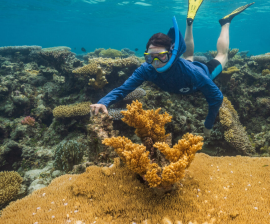
A landmark global study has identified more than 165,000 square kilometres of coral reefs across 71 countries with the strongest potential to survive a warming world – tripling previous estimates and offering a rare note of hope for one of the ocean’s most threatened ecosystems.
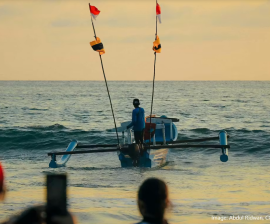
ndonesia’s fisheries are vast, worth billions of dollars and sustaining millions of people. They are also under threat from overfishing, bottom trawling, destructive fishing practices, mangrove conversion, and a changing climate. Local governance matters in combatting these issues.
Perched on the bow of an aluminum landing craft, Anne Cohen gazed a few yards ahead of the vessel toward a yellow robot gliding across the emerald Majuro lagoon.
The global target to protect 30% of the world’s oceans by 2030 is on course to fail unless governments place human rights at the centre of marine conservation policy, Greenpeace International has warned in a new report published today.
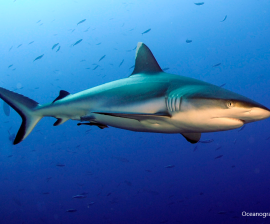
The world’s leading marine scientists have issued a stark warning that many shark and ray populations risk declining beyond recovery within our lifetimes unless immediate global political action is taken.
As the global community accelerates efforts towards the 30x30 target — protecting 30% of the ocean by 2030, as agreed under the Convention of Biological Diversity — marine conservation has entered a decisive phase.