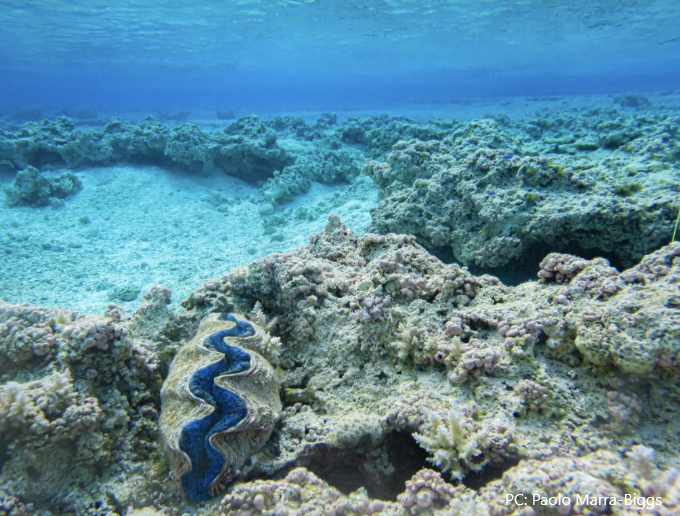
Giant clam populations in American Sāmoa are far more stable and abundant than previously thought thanks to the help of local villages, according to a new study led by researchers at University of Hawaiʻi at Mānoa Hawaiʻi Institute of Marine Biology ToBo Lab.
The research found that marine areas managed by local villages consistently supported higher clam densities and larger clam sizes compared to federally designated no-take reserves.
“Many expected that giant clam populations would be in sharp decline, especially near populated islands,” said Paolo Marra-Biggs, lead author of the study and PhD student. “Instead, we found that clam abundances have remained relatively stable over the past 30 years, and in some areas have maintained high abundances. The biggest surprise was that village-managed closures outperformed federally protected no-take areas, highlighting the efficacy of cultural stewardship.”