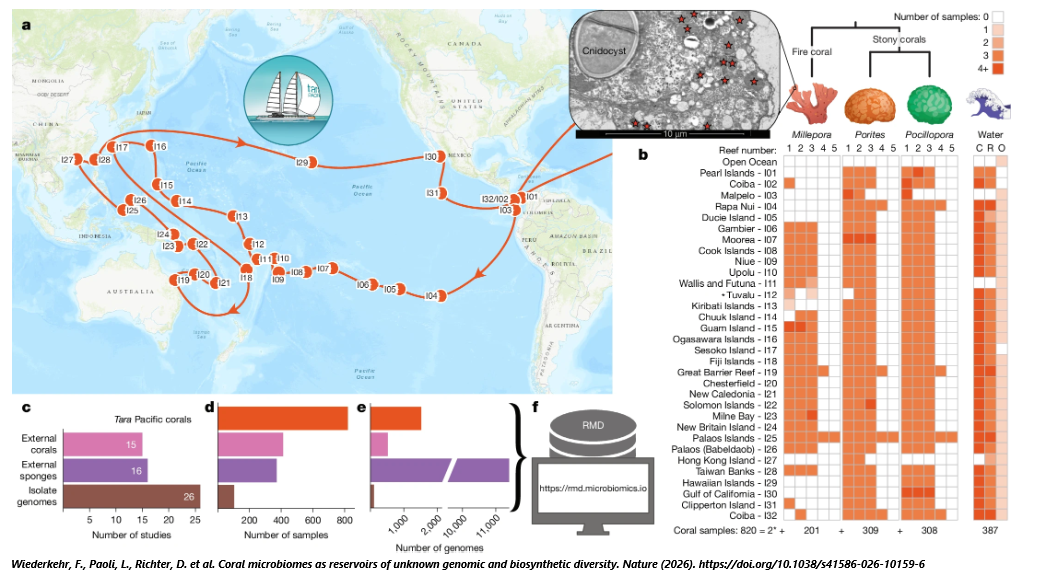
Coral reefs are marine biodiversity hotspots that provide a wide range of ecosystem services1. They are reservoirs of bioactive metabolites, many produced by microorganisms associated with reef invertebrate hosts2. However, for the keystone species of coral reefs—the reef-building corals—we still lack a systematic assessment of their microbially encoded biosynthetic potential and the molecular resources at stake due to the alarming decline in reef biodiversity. Here we analysed microbial genomes reconstructed from 820 reef-building coral samples of three representative coral genera collected at 99 reefs across 32 islands throughout the Pacific Ocean (Tara Pacific expedition)3. By contextualizing our analyses with the microbiomes of other reef species, we found that only 10% of the 4,224 microbial species and less than 1% of the 645 species exclusively identified in Tara Pacific samples had genomic information available. Furthermore, the biosynthetic potential of reef-building coral microbiomes rivalled or surpassed that of traditional natural product sources such as sponges. Among the biosynthetically rich bacteria in the reef microbiome, we identified new groups of Acidobacteriota that encode previously unknown enzymology, in turn opening promising avenues for functional protein engineering. Together, this study underscores the importance of conserving coral reefs as vital reservoirs of molecular diversity.