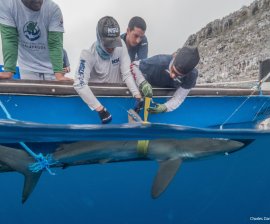
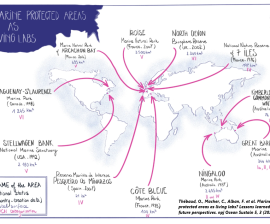
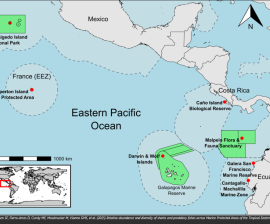
The limited range of marine protected areas (MPAs) offers reduced protection to vulnerable species such as the highly mobile silky shark (Carcharhinus falciformis).
The Kunming-Montreal Biodiversity Targets present the most ambitious and serious conservation agenda ever developed—the overarching goal of preserving 30% of the planet by 2030.
Marine Protected Areas (MPAs) management usually involves bringing multiple stakeholders together, to construct policy-relevant research programs and science-based tools for adaptive management.
Marine Protected Areas (MPAs) in the Tropical Eastern Pacific (TEP) support globally distinct reef fish populations, which exhibit differences between the remote oceanic islands and continental coast.
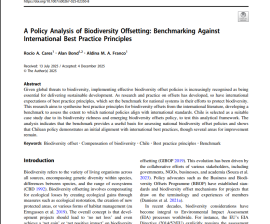
Given global threats to biodiversity, implementing effective biodiversity offset policies is increasingly recognised as being essential for delivering sustainable development.
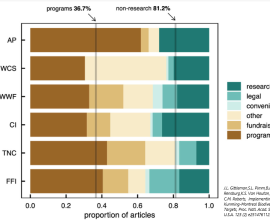
COP30 has come and gone, leaving behind a familiar mix of new commitments and renewed political promises. But amid the declarations of progress, one issue that received almost backhanded attention is the quiet abandonment of conservation projects after their high-profile launches.
Cette ressource est une compilation de notes
d’orientation fournissant des considérations pratiques
en matière d’égalité des sexes, de handicap et
d’inclusion sociale (GEDSI), dans une perspective
de solutions fondées sur la nature (SfN), pour les
This resource is a compilation of guidance notes that provide practical considerations for gender equity, disability and social inclusion (GEDSI) from a Nature-based solutions (NbS) perspective for Kiwa initiative new regional projects from 2025-2026.Call Number: [EL],613.10961 G
New research suggests that the rapid expansion of protected areas worldwide is giving a misleading picture of progress, with biodiversity continuing to decline inside many sites designated for protection.