In 1990, delegates assembled at the Plaza Hotel in Bangladesh for the Ministerial Level Conference on Environment and Development in Asia and the Pacific.
This audio programme highlights the Marovo Lagoon area, which is under consideration for World Heritage listing due to its status as the largest lagoon in the world with a double barrier reef system.
SPREP in 1992 sponsored a seminar on the Environment and Reforestation for the Catholic Youth Group. SPREP officer Neva Wendt, represented SPREP to this seminar.
A 20 Year Report - Because consumer demand for fish is at an ever increasing rate, there is a need to clarify indigenous rights, maintain balance between conservation and development, and for international agreements to regulate fishing activities throughout the Pacific region.
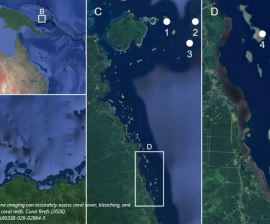
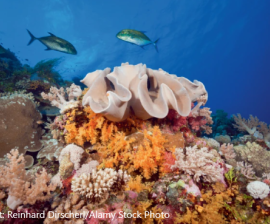
Assessing the impacts of rapid environmental change on coral reefs is hindered by a discrepancy between the regions with the greatest need and those that receive the most research funding.
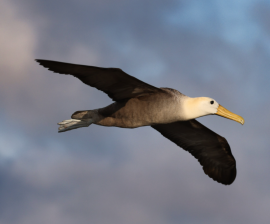
Animals that cross borders often encounter conservation systems that stop at them. Migratory species move through jurisdictions with little regard for political boundaries, relying on habitats spread across large distances and governed by different rules.
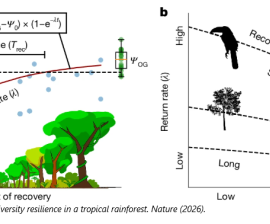
The UN Decade on Ecosystem Restoration aims to stop biodiversity losses1. Approximately 60% of tropical forests have already been lost or severely degraded2, making restoration essential to achieve conservation goals.
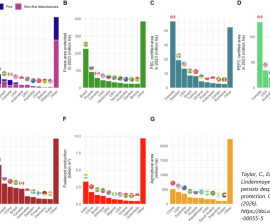
Forest loss is a significant global problem. Forest certification schemes and protected areas are two key approaches for improving forest conservation and management outcomes, but their effectiveness in reducing national-level forest loss remains unclear.
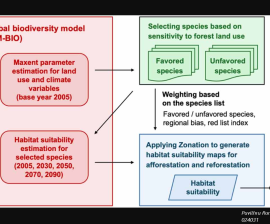
Afforestation and reforestation (AR) are effective strategies for large-scale carbon dioxide removal (CDR) and climate change mitigation, as they offer the potential to sequester vegetation and soil carbon. However, the expansion of AR raises concerns about the adverse impacts on biodiversity.