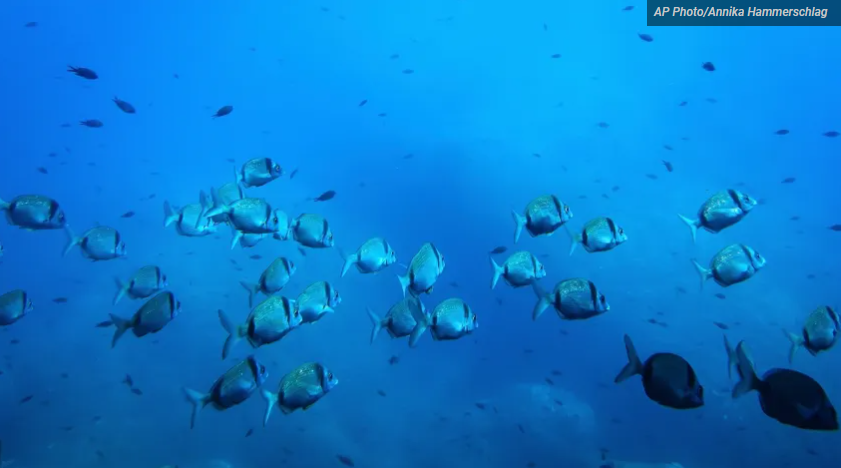
The world’s first legally binding agreement to protect marine life in international waters took effect Saturday, marking a historic moment for ocean conservation after nearly two decades of negotiations.
The High Seas Treaty will govern nearly half the planet’s surface – the vast ocean areas beyond any country’s control. These waters face mounting threats from destructive fishing practices, shipping, plastic pollution, overfishing and potential deep sea mining, all compounded by climate change. The ocean absorbs carbon dioxide and produces oxygen, making its health critical for addressing the climate crisis.
Original Article: Things to know about the High Seas Treaty as it takes effect