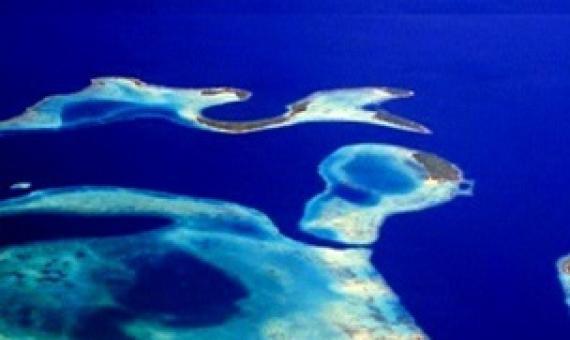
In Hawaiʻi and across much of Oceania, Pacific Islanders celebrate the connections between their islands and the ocean that surrounds them.
A Comparative Analysis of Protected Area Management Effectiveness (PAME) Evaluation Tools for the Pacific Islands Region
Protected Area Management Effectiveness (PAME) can be defined as the extent to which management is protecting values and achieving goals and objectives. The report also reviews attempts to develop headline indicators that would provide essential PAME information for a site, given the challenge of balancing the number of questions and indicators needed for a full assessment with the limited capacity.Call Number: [EL]ISBN/ISSN: 978-982-04-1181-4,978-982-04-1183-8Physical Description: 102 p. 29 cm
Action strategy for Nature Conservation in the Pacific Islands Region, 2003-2007
Conservation can best be achieved when conservation values are part of the mainstream
of society, when they become part of everyones decisions including government, private
enterprise and the community as a whole. This was recognized by the more than 320
participants from Pacific island governments, Pacific and international organizations and
community groups when they met in Rarotonga, Cook Islands in July 2002 for the 7th
Introducing Pacific BioScapes
Pacific Island countries have identified many critical issues and national priorities to protect biodiversity, communities and ecosystem in our region. In response, the Pacific Biodiversity and Sustainable Land-SeaScapes (Pacific BioScapes) Programme has the overall aim to better managing our coastal and marine resource and adapting to climate change through ecosystem-based responses.Call Number: [EL]Physical Description: 1 p.
9th Pacific Islands Conference on Nature Conservation and Protected areas, 2-6 December, 2013, Suva, Fiji : Laucala declaration on conservation in Oceania
The small economies and populations of the Pacific islands have very limited financial
capacity, yet are stewards for an immense area of ocean and its associated global
ecosystem servicesAvailable online
Also available in hard copy.Call Number: [EL],333.7 PACPhysical Description: 5 Pages,40 p.
Conserving our Sea of Islands: State of Protected and Conserved Areas in Oceania
Protected and conserved areas are vital for safeguarding our unique biodiversity - as well as underpinning culture and livelihoods. This report is the first comprehensive regional assessment of protected and conserved areas. The biodiversity and Protected Areas Management Programme (BIOPAMA) supported the preparation pf this report. Call Number: [EL],333.95 CONISBN/ISSN: 978-2-8317-2214-6,978-2-8317-2215-3Physical Description: 272 p.
Managing Marine Plastic Debris in Asia and the Pacific
Countries in East Asia and the Pacific are at the center of the marine plastics crisis with some countries in the region representing the biggest contributors and others disproportionately affected by the impacts of marine plastic debris on their shores. Call Number: [EL]Physical Description: 38 p.
Challenges for the Pacific: Biodiversity Assessment & Management in EIAs
Insufficient data for baseline Biodiversity Assessment form the Pacific Islands and Countries (PICs). Most PICs lack taxonomic/ecological data to inform the biodiversity assessments/reports.Call Number: [EL]Physical Description: 4 p.
Pacific Islands Protected Area Portal (PIPAP)
To provide a doorway through which Pacific islands protected area practitioners can share expertise and benefit from opportunities. To provide up-to-date PA coverage data relevant information and management tools to support protected area decision making and planning. Call Number: [EL]Physical Description: 13 p.
IUCN Natural assets: annual report 2009
Oceania is geographically one of IUCNs largest regional programmes, covering much of the central and south west Pacific Ocean as well as Australia and New Zealand. The Pacific Islands cover almost 15% of the worlds ocean surface. The area is characterized by a high degree of ecosystem and species diversity, as well as a high level of endemicity (often over 90% for particular groups) on many of the Pacific Islands. Increasing awareness about the importance of biodiversity and the threats to these species is critically important to the survival of all species on Earth.