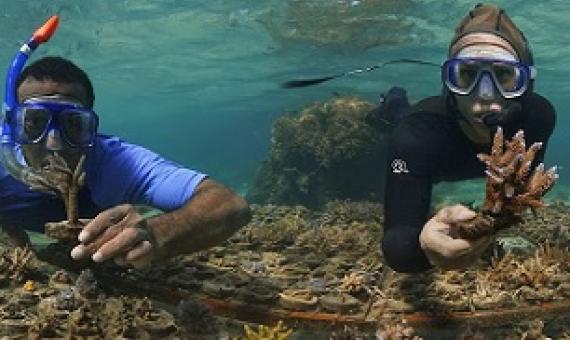
Victor Bonito takes the concept of working from home to new levels. The marine scientist's house overlooks his lab: the beautiful turquoise-blue waters of Fiji's Coral Coast.
Victor Bonito takes the concept of working from home to new levels. The marine scientist's house overlooks his lab: the beautiful turquoise-blue waters of Fiji's Coral Coast.
Protected areas are central in strategies to conserve biodiversity. Effective area-based conservation relies on biodiversity data, but the current biodiversity knowledge base is insufficient and limited by geographic and taxonomic biases. Public participation in biodiversity monitoring such as via community-based monitoring or citizen science increases data collection but also contributes to replicating these biases or introducing new ones.
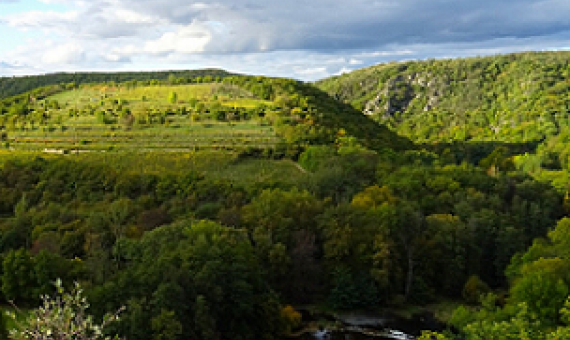
A new international study has found that amphibians and reptiles inhabiting the world's nature reserves, or Protected Areas (PAs), will be better protected against climate change than species found outside these areas, but are still likely to be harmed.
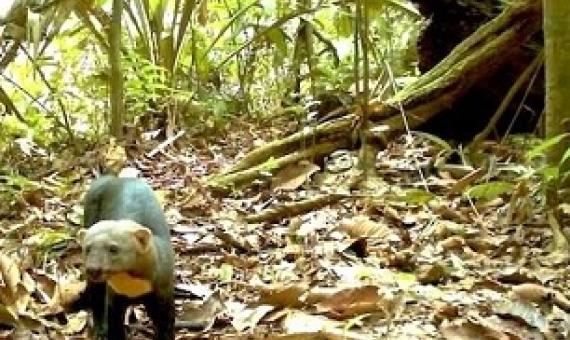
By 2030, if the "30 by 30" initiative supported by more than 100 countries is successful, 30% of our land and ocean ecosystems will be designated protected areas meant to safeguard biodiversity and help limit the impacts of climate change.
Protected Area Management Effectiveness (PAME) can be defined as the extent to which management is protecting values and achieving goals and objectives. The report also reviews attempts to develop headline indicators that would provide essential PAME information for a site, given the challenge of balancing the number of questions and indicators needed for a full assessment with the limited capacity.Call Number: [EL]ISBN/ISSN: 978-982-04-1181-4,978-982-04-1183-8Physical Description: 102 p. 29 cm
This report was commissioned by the Secretariat of the Pacific Regional Environment Programme (SPREP) to raise awareness and understanding of the tools available to evaluate Protected Area Management Effectiveness (PAME); to provide case studies from the region on PAME assessment; and to help inform decision-making when choosing tools and planning assessments.
Protected areas are essential to biodiversity conservation. Creating new parks can protect larger populations and more species, yet strengthening existing parks, particularly those vulnerable to harmful human activities, is a critical but underappreciated step for safeguarding at-risk species. Here, we model the area of habitat that terrestrial mammals, amphibians, and birds have within park networks and their vulnerability to current downgrading, downsizing, or de-gazettement events and future land-use change.

Cepa sustainable programmes director Kay Kalim told the 3rd National Protected Area Forum in Port Moresby that the protected areas communities around the country are the guardians of PNG’s future and economic sustain-ability of land and sea use.

The Conservation and Protection Authority (CEPA) budget of K55 million for 2018 to 2028 is aimed at setting up conservation areas and protected ecosystems around Papua New Guinea.
Forests play a critical role in stabilizing Earth’s climate. Establishing protected areas (PAs) represents one approach to forest conservation, but PAs were rarely created to mitigate climate change. The global impact of PAs on the carbon cycle has not previously been quantified due to a lack of accurate global-scale carbon stock maps. Here we used ~412 million lidar samples from NASA’s GEDI mission to estimate a total PA aboveground carbon (C) stock of 61.43 Gt (+/− 0.31), 26% of all mapped terrestrial woody C.