  • SPREP Home
  • Protected Areas
SPREP Home
Log in
Search
Home | PIPAP - Supporting the sustainable management of protected areas in the Pacific Region.
  • Data
    • Protected Areas
    • Management Effectiveness Dashboard
    • Spatial Data
  • Assistance
    • How SPREP Helps
    • WDPA Protected Area Registration
    • Protected Area Working Group
  • Resource Hub
    • Publications
    • Decision Making Support Tools
    • Case Studies
  • Newsletter
    • Browse Newsletter Archive
    • Subscribe Now
  • Account
    • Login

Main menu

  • Data
  • Assistance
  • Resource Hub
  • Newsletter
  • Account

Breadcrumb

  1. Home
  2. Resource Hub
  3. Publications

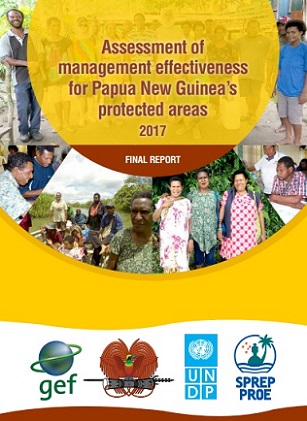
Assessment of management effectiveness for PNG's protected areas 2017

This is the final report prepared by the Secretariat of the Pacific Regional Environment Programme (SPREP) for submission to the United Nations Development Programme (UNDP) and the Papua New Guinea Conservation and Environment Protection Authority (CEPA) in relation to the 2016–17 assessment of the management effectiveness of Papua New Guinea’s protected areas.

Links
https://www.sprep.org
Publication
Related page category(s)
Management
Community Based Management
Management Effectiveness Report
Progress Towards Protected Area Targets
Pacific Protected Areas
Related Pages
Why saving seagrass meadows could help save the world’s coastlines
Mapping global freshwater ecosystems to guide national restoration targets and nature-based solutions
Towards an Understanding of Marsupial Interchange between Australia and New Guinea
Pacific Islands Ocean Conference (PIOC) Report, Heritage Hotel Honiara, Solomon Islands, 29 September - 3 October 2025.
Towards a systematic framework to assess restoration success of interventions in coral reef ecosystems
The ‘Blue Pacific’: ocean governance and planetary health
Operationalizing nature recovery to market outcomes
Against the clock: Coral reefs demand a renaissance in discovery
Rethinking the 30 by 30 target to ensure the well-being of small-scale fishing communities
Ecological Constraints on Tropical Forest Recovery Challenge the “Long-Term” Vision of the Kunming–Montreal Global Biodiversity Framework

Latest News

UN Treaty
Pacific hosts first UN treaty law workshop to strengthen regional legal…
March 16, 2026 by Isaac Rounds
Read More
Australia
Australia's biodiversity report card leaves out fossil fuel support
March 16, 2026 by Isaac Rounds
Read More
Indigenous People
Indigenous ocean voices are still being marginalised
March 16, 2026 by Isaac Rounds
Read More
SPREP
Magnifying Pacific Women Voices in Environmental and Social Impact…
March 13, 2026 by Isaac Rounds
Read More

Latest Resources

Why saving seagrass meadows could help save the world’s coastlines
March 16, 2026 by Isaac Rounds
Read More
Fisheries for our future
March 14, 2026 by pipap.sprep.org
Read More
Analyse et cartographie de a résilience ecosystémique et socio-economique…
March 14, 2026 by pipap.sprep.org
Read More
Analysis and mapping of the ecosystem and socio- economic resilience (…
March 14, 2026 by pipap.sprep.org
Read More
Biodiversity and Protected Areas Management Programme Logo Organisation of African, Caribbean and Pacific States Logo Sprep BioScapes Logo Flag of European Union International Union for Conservation of Nature Logo European Commission Logo

SPREP Footer Logo

A resilient Pacific environment sustaining our livelihoods and natural heritage in harmony with our cultures.

+685 21929
[email protected]

  • SPREP on Facebook
  • SPREP on YouTube
  • SPREP on Twitter
Protected Areas by Country
  • American Samoa
  • Cook Islands
  • Fiji
  • French Polynesia
  • Guam
  • Kiribati
  • Marshall Islands
  • Micronesia (Federated States of)
  • Nauru
  • New Caledonia
  • Niue
  • Northern Mariana Islands
  • Palau
  • Papua New Guinea
  • Samoa
  • Solomon Islands
  • Timor-Leste
  • Tokelau
  • Tonga
  • Tuvalu
  • Vanuatu
  • Wallis and Futuna
SPREP © 2026. All rights reserved.