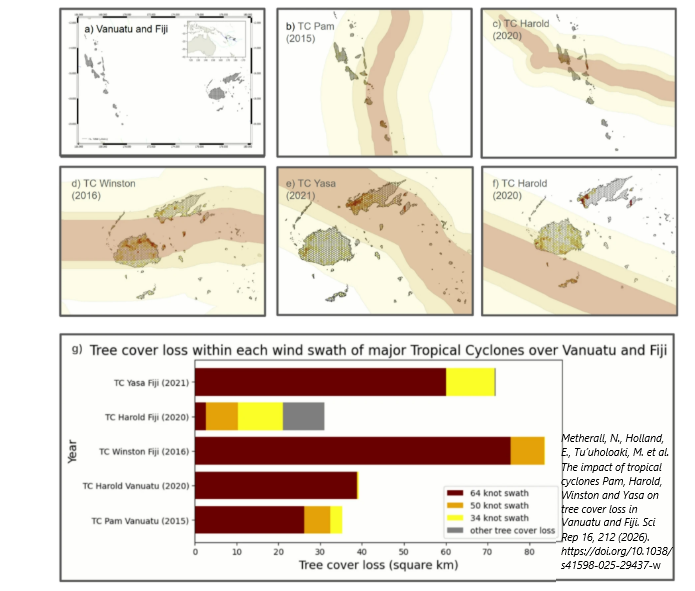
Many Pacific Small Island Developing States are vulnerable to Tropical Cyclones (TCs) leading to an estimated average annual loss of USD 1.08 billion. The study quantifies the impacts of tropical cyclones on tree cover and associated ecosystem services, beginning with coastal protection and the loss of carbon, for inclusion in Post Disaster Needs Assessment (PDNAs), Nationally Determined Contributions (NDCs), catastrophe risk insurance payments and loss and damage accounting. The study focuses on the impacts of tree cover loss resulting from four separate category five tropical cyclones in Fiji and Vanuatu: Pam, Harold, Winston and Yasa. Compared to national average annual tree cover losses between 2000 and 2023, TCs Pam and Harold increased tree cover loss 4.6 and 5.2-fold in Vanuatu and TCs Winston and Yasa increased tree cover loss 3.6 and 3.1-fold in Fiji, respectively. The resulting loss of carbon storage adds an estimated 23.4–25.0% in economic losses based on IPCC Tier II emissions factors and 37.2% for IPCC Tier I emissions factors to the Vanuatu and Fiji PDNA economic loss estimates, respectively. The focus on carbon emissions is a first step towards a quantification of the loss of ecosystem services in countries whose people depend on natural resources for daily subsistence. The study makes a case for inclusion of environmental damage in both PDNA and loss and damage estimates to justify additional financial investments in disaster recovery.