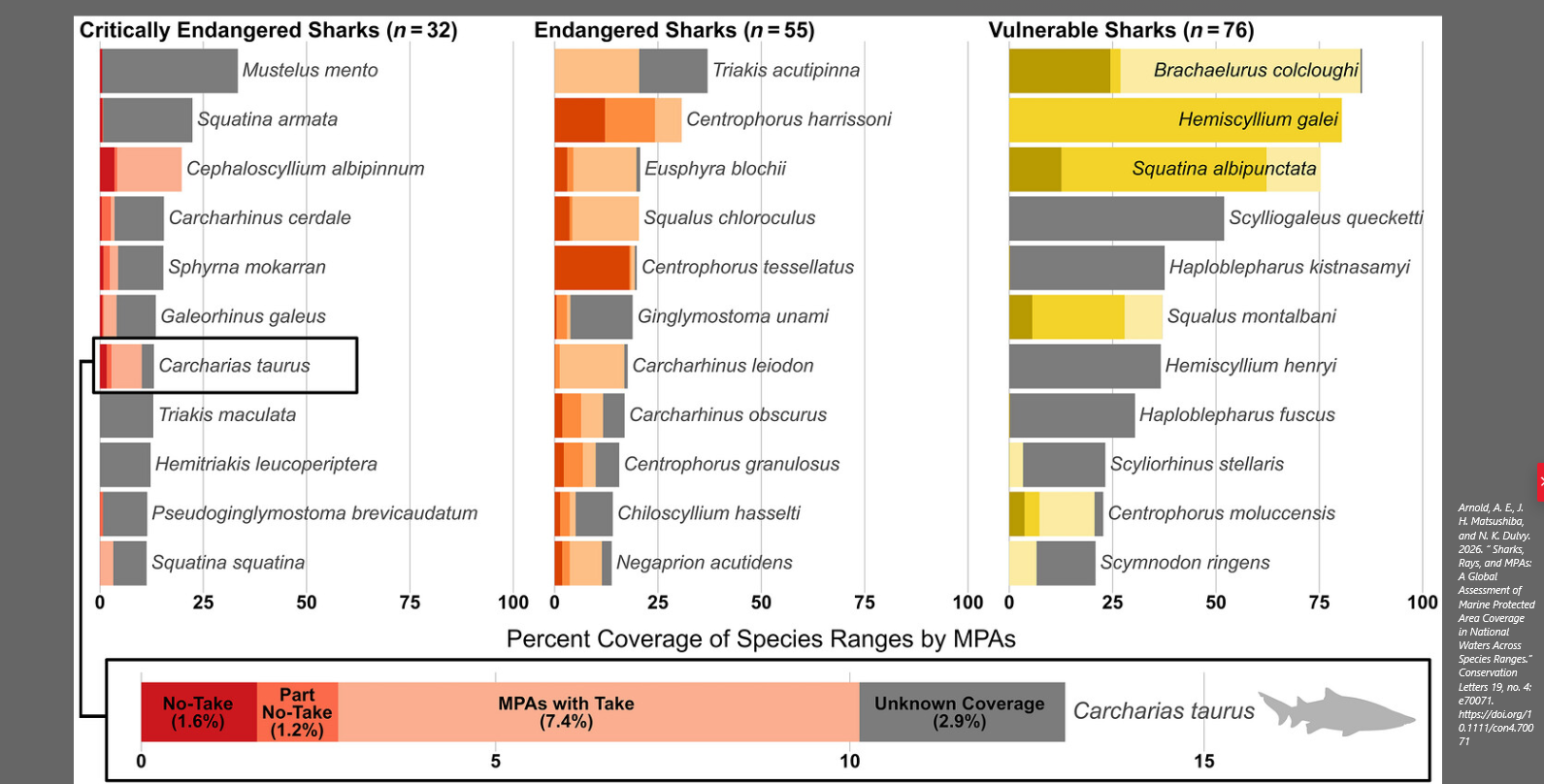
Global conservation agreements emphasize protected area coverage targets, such as the Kunming–Montreal Global Biodiversity Framework's 30 × 30 target, yet their effectiveness in safeguarding biodiversity remains uncertain. We measure the intersection between marine protected area (MPA) coverage and the distribution of sharks and rays. Using global range maps and MPA boundaries within national exclusive economic zones, we calculate the percent of species’ ranges within MPAs, focusing on no-take areas. We reveal significant shortfalls in species-level protection. Within national waters, no Critically Endangered species has more than 5% of its range in no-take MPAs, and 79% of threatened species have less than 1%. We also find that the WDPA contains major gaps in take-status reporting, as only one third of countries (34%) report take-status information for any MPAs to the WDPA, further limiting estimates of meaningful protection. These results highlight the implementation gap between global coverage targets and biodiversity outcomes, reinforcing the need for species-focused protection.