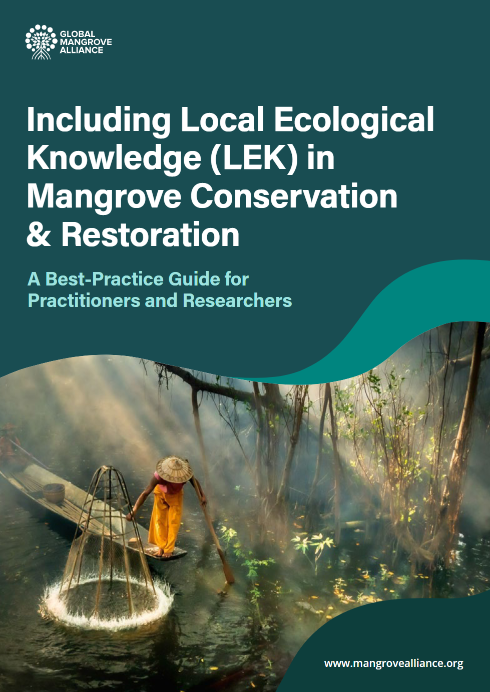
Mangroves are trees and shrubs that grow in saline and brackish tidal waters across tropical and subtropical regions of the world.1Mangroves support rich biodiversity spanning both marine and terrestrial environments. Their roots anchor to the sediment, providing shelter for an array of marine fauna including fish, invertebrates, and mammals. Their canopy provides habitat, food, and shelter for many terrestrial organisms, including mammals such as tigers and monkeys, birds, reptiles, and insects. Mangroves often show close ecological linkages to adjacent ecosystems, including coral reefs, seagrass beds, salt marshes, and mudflats, supporting a vast network of communities and ecological interactions.
Grimm, Kerry, Spalding, Mark, Leal, Marice, Kincaid, Kate, Aigrette, Lalao, Amoah-Quiminee, Peace, Amoras, Laercio, Amouine, Didier, Areki, Francis, Arends, Wilfrido, Argueta, José María, Arrieta-Giron, Camilo A., Astra, Apri Susanto, Atuga, Gilbert Nyabo