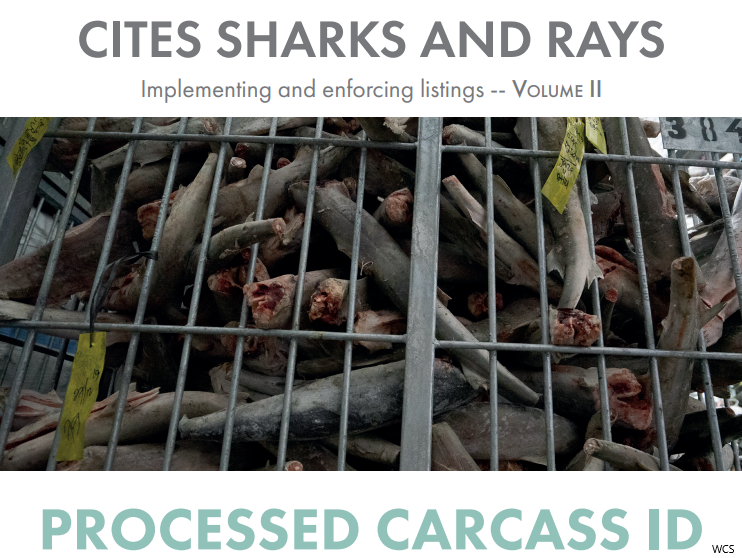
This guide forms part of a three-volume series of identification guides: Volume I – Full Carcass ID, Volume II – Processed Carcass ID [this guide], and Volume III – Dried Product ID. Each of these guides has been designed to follow a similar simple structure to guide users with no previous knowledge of sharks and rays with identification of different derivative products. This Processed Carcass ID guide was created to enable inspectors to visually identify a large number of shark and ray processed carcasses (trunks) found in trade in order to facilitate the monitoring of trade of those species listed in Appendix I and II of CITES. It has been designed to meet the need expressed by inspectors in Indonesia and other countries for an identification tool that is quick and easy to use when faced with the identification of processed carcasses.
Restoration by HER: Gender-responsive approaches to ecosystem restoration across global landscapes
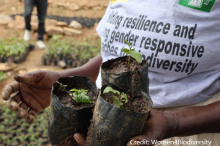
Ecosystem restoration is recognised as a key strategy for confronting the dual crises of climate change and biodiversity loss. The United Nations Decade on Ecosystem Restoration (2021-2030)1 sets an ambitious agenda to restore degraded ecosystems worldwide (FAO et al., 2021).
Rethinking the 30 by 30 target to ensure the well-being of small-scale fishing communities

Target 3 of the Convention on Biological Diversity’s (CBD) Kunming-Montreal Global Biodiversity Framework calls for the protection of 30% of terrestrial areas, inland waters, and marine and coastal areas through area-based conservation (protected areas and other effective conservation measures) b
Revenues for Nature Guidebook Series Nature-based Models for Unlocking Private Investment into Freshwater (Expanded Edition)
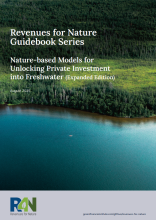
The R4N Guidebook Series provides an in-depth analysis of models across the globe that unlock private sector capital into nature restoration or protection, including nature-based solutions (NbS).
Review and Recommendations Regarding Human Activity Surveillance Technologies in Pacific Marine Protected Areas
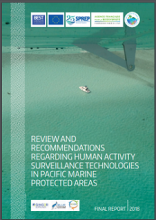
The present study, commissioned by the French Agency for Biodiversity (Agence française pour la biodiversité, AFB), is part of the "Pacific Biodiversity Blue Belt" project.
Review of Cetacean Diversity Status and Threats in the Pacific Island Region
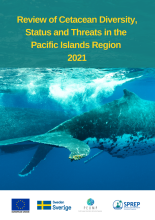
This report brings together information on the status of and threats to whales and dolphins in the Pacific Islands region.
Review of legislation, policies, strategies and plans relating to the development of marine protected areas in Fiji
Fiji is committed to the sustainable use of its marine resources and conserving its marine biodiversity. This commitment has been ratified through Fiji’s international responsibilities and obligations under the United Nations Convention on Biological Diversity (UNCBD).
Review of natural resource and environment related legislation : Cook Islands
Environment related legislation reviewAvailable onlineCall Number: [EL]Physical Description: 20 p. ; 29 cm
Rodent Control Manual : A Practical Guide for Rodent Control for Communities and Technicians Working in Samoa
The purpose o the manual is provide practical guidance to technicians attempting to plan and control rodents (rats and mice) using poison baiting for biodiversity conservation purposes under Samoan forest conditions.
Rubble in paradise: motile infaunal diversity patterns across reef environments in Palau
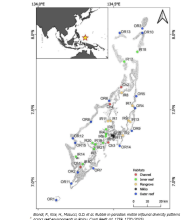
Assessments of coral reef biodiversity generally focus on corals and fishes, although there is a variety of other taxa that live within the structure of coral reefs.
Samoa Green Livelihoods Community Kit : A Traniners' Resource for Community Course Implementation
It is important to respect Samoa’s traditional knowledge, values, pre-existing
perceptions and relationship towards environment, conservation, and community
development. Effective community engagement needs cooperation from community members,
Samoa Green Livelihoods Programme : A Training Guide for Facilitators
The Green Livelihoods project is being led by Samoa Conservation Society (SCS) with funding from the Civil Society Support Programme (CSSP). It has two objectives that are closely related to Samoa: 1.
Samoa Ocean Strategy 2020-2030
Samoa has long recognised the Pacific Ocean as a source of social and economic benefit which has sustained its communities for generations. The ocean remains a primary resource for food and livelihoods that requires responsible stewardship.
Saving the ocean and climate through innovative marine protected area finance mechanisms
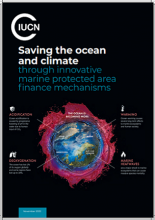
Ocean threats: acidification, deoxygenation, warming, heatwaves. Do we have anything useful to bend, change, or reverse the results?
Scaling Up Conservation in a Connected World

Our planet is facing an unprecedented and accelerating biodiversity crisis, driven by human activity and compounded by climate change, which is bringing ever more severe weather to a world already strained by poverty and inequality.
Scaling Up: Conservation in a Connected World
Our planet is facing an unprecedented and accelerating biodiversity crisis, driven by human activity and compounded by climate change, which is bringing ever more severe weather to a world already strained by poverty and inequality.
Sea Turtle Monitoring Manual
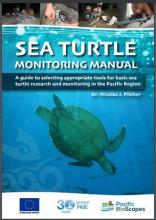
This manual is not a summary of all that is known about sea turtles. There are already very good books and resources that do that. It is also not exhaustive about research and monitoring. Nor it is the global synthesis of all turtle research options.
Seed-dispersing animals are in decline, impacting forests and the climate: Study
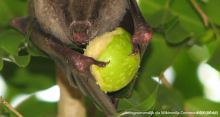
A lot of attention has been paid to the decrease in bee populations and other pollinators, but a recent review article makes the case that we should be equally alarmed by the declining numbers of seed-dispersing animals, which are crucial for growing healthy forests.
SEM-PASIFIKA Socioeconomic Monitoring Guidelines for Coastal Managers in Pacific Island Countries
|
Wongbusarakum, S., Pomeroy, B., 2008. |
Sepik Wetlands Management Initiative, Papua New Guinea
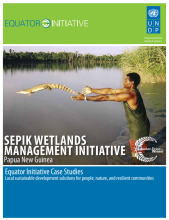
The Sepik River is the longest river on the island of New Guinea. The majority of the river flows through the Papua New Guinea provinces of Sandaun and East Sepik, with a small section flowing through the Indonesian province of Papua.
Setting priorities for marine conservation in the Fiji Islands Marine Ecoregion
The Fiji Islands Marine Eco region which includes our coastal, Inshore and offshore marine environment is rich in marine biodiversity and endemism.
Setting priorities for marine conservation in the Fiji Islands Marine Ecoregion
The Fiji Islands Marine Eco region which includes our coastal, Inshore and offshore marine environment is rich in marine biodiversity and endemism.
Severe and widespread coral reef damage during the 2014-2017 Global Coral Bleaching Event

Ocean warming is increasing the frequency, extent, and severity of tropical-coral bleaching and mortality. During 2014–2017, marine heatwaves caused the Third Global Coral Bleaching Event. We analyze data from 15,066 reef surveys globally during 2014–2017.
Sharks and rays of the Samoan archipelago: a review of their biological diversity, social and cultural values, and conservation status
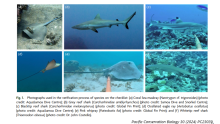
Data on chondrichthyan (sharks, rays, and chimaeras) populations is largely lacking for many countries and territories in the Indo-Pacific. Aims.
Siporae Rainforest Conservation Area - Management Rules
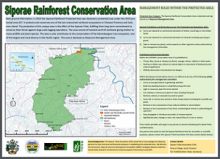
In 2019 the Siporae Rainforest Protected Area was declared a protected area under the 2010 protected area ACT. It protects and conserves one of the last untouched rainforest ecosystems in Choiseul Province and Solomon Island.
Sirebe Rainforest Conservation Area - Management Rules
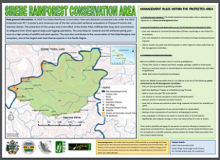
In 2019 The Sirebe Rainforest Conservation Area was declared a protected area under the 2010 protected area ACT. It protects and conserves one of the last untouched rainforest ecosystems in Choiseul Province and Solomon Islands.
Six key policy recommendations to advocate for marine conservation that matches the ocean’s dynamism
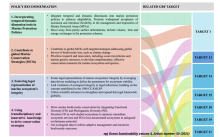
Marine ecosystems face threats from human-induced stressors like climate change, pollution, and habitat loss. Despite international endeavors, significant gaps remain in understanding ocean dynamics.
Social implications of the 30×30 global conservation target
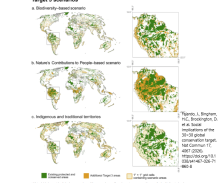
Target 3 of the Kunming-Montreal Global Biodiversity Framework aims to increase global protected and conserved area coverage to at least 30% by 2030.
Social implications of the 30×30 global conservation target
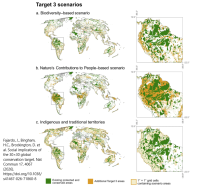
Target 3 of the Kunming-Montreal Global Biodiversity Framework aims to increase global protected and conserved area coverage to at least 30% by 2030. The impact on people, whether positive or negative, will depend on the social context of additional areas and how they are governed and managed.
Socio-environmental movements emerge as key global guardians of biodiversity amid rising violence

A new study published in the Proceedings of the National Academy of Sciences reveals that organized civil society and social mobilization are key, yet often unrecognized, agents of global biodiversity conservation.
Socioeconomic Fisheries Surveys in Pacific Islands: a Manual for the Collection of a Minimum Dataset
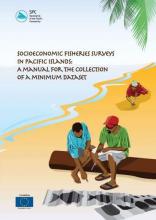
Kronen, M., Stacey, N., Holland, P., Magron, F., Power, M. 2007. Socioeconomic Fisheries Surveys in Pacific Islands: a Manual for the Collection of a Minimum Dataset. SPC, Noumea, New Caledonia.
Socioeconomic Manual for Coral Reef Management
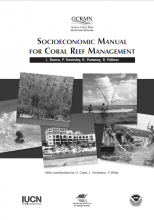
Bunce, L. Townsley, P., Pomeroy, R., Pollnac, R. 2000. Socioeconomic Manual for Coral Reef Management. GCRMN, AIMS, Townsville, Australia.
Solomon Islands Interactive Marine Atlas
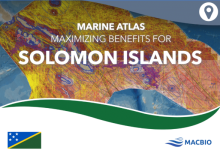
While the ocean covers more than two thirds of the Earth’s surface, the oceanic territory of Solomon Islands is more than 47 times larger than its land territory. With an exclusive economic zone (EEZ) of 1.34 million km2, Solomon Islands is a large ocean state.
Solomon Islands National Marine Ecosystem Service Valuation
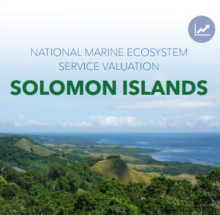
Solomon Islands is composed of almost 1000 islands and has the second longest coastline and the second largest Exclusive Economic Zone (EEZ) in the Pacific.
SOLOMON ISLANDS NATIONAL OCEAN POLICY
Solomon Islanders are ocean people. We are not separate to our ocean: we are part of our ocean. It is reflected in our history, our culture, our traditions and in our day-to-day lives.
Solomon Islands National Plan of Action for Marine Turtles 2023-2027
It is through ministerial leadership with relevant stakeholders and partners’ collaboration that produces and finalizes the Solomon Islands National Plan of Action for Marine Turtles (NPOA) 2023-2027.
Solomon Islands Saltwater Crocodile Conservation and Management Plan 2023-2027
Reduce the risk of crocodile attack on people, while ensuring the long-term conservation and management of the species based on science, culture, and traditional knowledge for sustainable utilisation.
South Pacific regional workshop on economics and Marine Protected areas, Suva Fiji, 26-30 May 2008 : workshop proceedings
Some presentations refer to the term Marine Managed Area (MMA) instead of Marine Protected Area (MPA) in order to cover more management options.
Southern New Ireland, Papua New Guinea: A Biodiversity Assessment
Biologically, New Ireland has remained one of the least studied regions of Papua New Guinea (PNG), and the mountainous southern zone has been considered both a high priority for biodiversity conservation and a major “scientific unknown” (Beehler 1993).
Spawning potential surveys in Fiji: A new song of change for small-scale fisheries in the Pacific
Catastrophic overfishing of small-scale coastal fisheries through the Pacific poses a major threat to regional food security and biodiversity. Globally, approaches to fisheries assessment and management that were developed for industrial fisheries, are failing small-scale data-poor fisheries.
Spillover benefits from the world’s largest fully protected MPA
Previous research has cast doubt on the potential for marine protected areas (MPAs) to provide refuge and fishery spillover benefits for migratory species as most MPAs are small relative to the geographic range of these species.
Standards of practice to guide ecosystem restoration
The United Nations Decade on Ecosystem Restoration 2021–2030 (hereafter “UN Decade”) aims to prevent, halt and reverse ecosystem degradation and recover biodiversity, and ecosystem integrity; enhance human health and well-being, including sustainable delivery of ecosystem goods and services; and
Standards, methods and guidelines for cross-referencing ecosystem classifications and maps to the IUCN Global Ecosystem Typology
This publication establishes a structured, rigorous standard for cross-referencing ecosystem types to the GET. It first reviews the need for reliable interoperability among ecosystem classifications and the role of the GET as a framework for synthesis.
Status of monitoring and evaluation of Tonga’s Special Management Area program
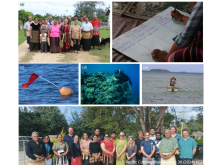
Tonga’s Special Management Areas (SMAs) have been widely supported by the people of Tonga as a successful approach to the comanagement of their fisheries and marine resources.
Status of policy and target development and implementation for marine protected areas/marine managed areas in the Pacific Islands Region - a preliminary assessment and future directions
This paper is based on presentations and discussions held during a marine managed areas (MMAs)2session organised by NOAA, SPREP and Conservation International (CI) as part of the “Our Seas of Islands” Regional Forum for Oceania on MMAs convened by
Super corals could help buy time for reefs in a warming world
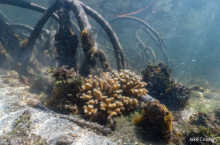
Coral reefs are in crisis. Rising ocean temperatures driven by climate change are pushing these ecosystems to the brink, with mass bleaching events becoming more frequent and severe. But what if nature already holds part of the solution?
Sustainable Kava Cultivation, Pacific BioScapes Programme - Vanuatu
The rapid expansion of kava farms, and the increase in market value for the plant, has resulted in an increased clearing of native forests in key growing zones. Cleared cultivation areas are now penetrating some of the most well preserved native forests of the Pacific region.
SWOT Report: Atlas of Global Sea Turtle Status
The sea turtle conservation community has made remarkable strides in globalscale priority setting in recent decades thanks to the collective efforts of nongovernmental organizations (NGOs), universities, and local communities.
Takitumu Conservation Area - OECM process of recognition
The National Environment Service worked closely with family representatives of the Takitumu Conservation Area, to submit an assessment application that will gave the TCA official international recognition as an Other Effective area-based Conservation Measure (OECM). All documents relevant to
Terminal evaluation of UN Environment project: Prevention, control and management on invasive alien species in the Pacific island.
Invasive alien species represent an insidious and pervasive threat to the environmental, economic and human well-being of the Pacific islands.
Terrestrial Biodiversity of Manuae Atoll, Cook Islands
The most common and numerous island type across the Pacific basin are atolls.