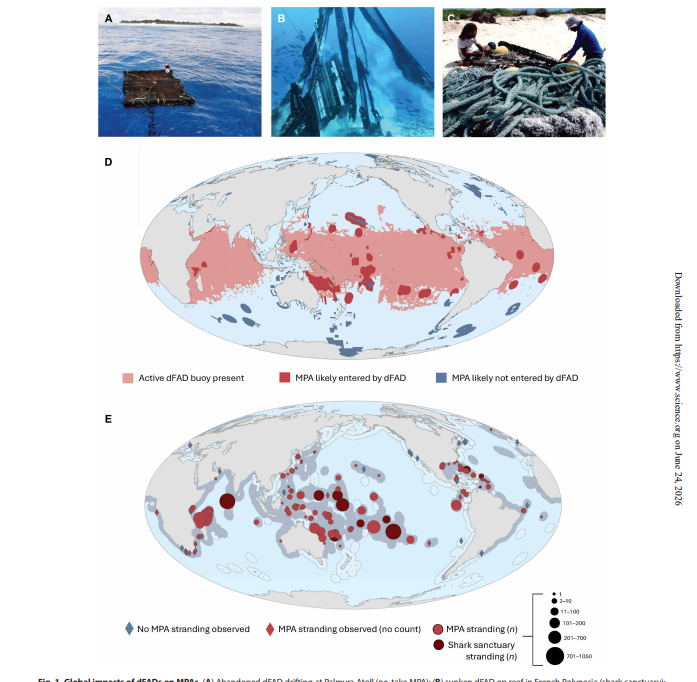
Protected areas are a critical component of efforts to reverse biodiversity loss by 2050. In the ocean, free-driftingfish aggregating devices (dFADs) are released in large numbers by industrial purse seine fishing companies tohelp catch tuna. These devices can enter marine protected areas (MPAs) undetected, potentially leading to wildlifeentanglement, plastic pollution, and habitat degradation. Here we investigate processes by which dFADs maycompromise MPA objectives and assess the burden they put on existing MPAs. By analyzing drift, strandings, andexpert interview data, we show that dFADs have likely interacted with 53% of the global MPA network by area andstranded in 174 protected areas, which are home to at least 490 at-risk species. While recent improvements to dFADdesign should reduce harm to wildlife, our findings suggest that improved regulation, transparency, and industryaccountability are required to mitigate additional effects on MPAs, especially around documented hotspots in thecentral Pacific, western Indian Ocean, and Caribbean.