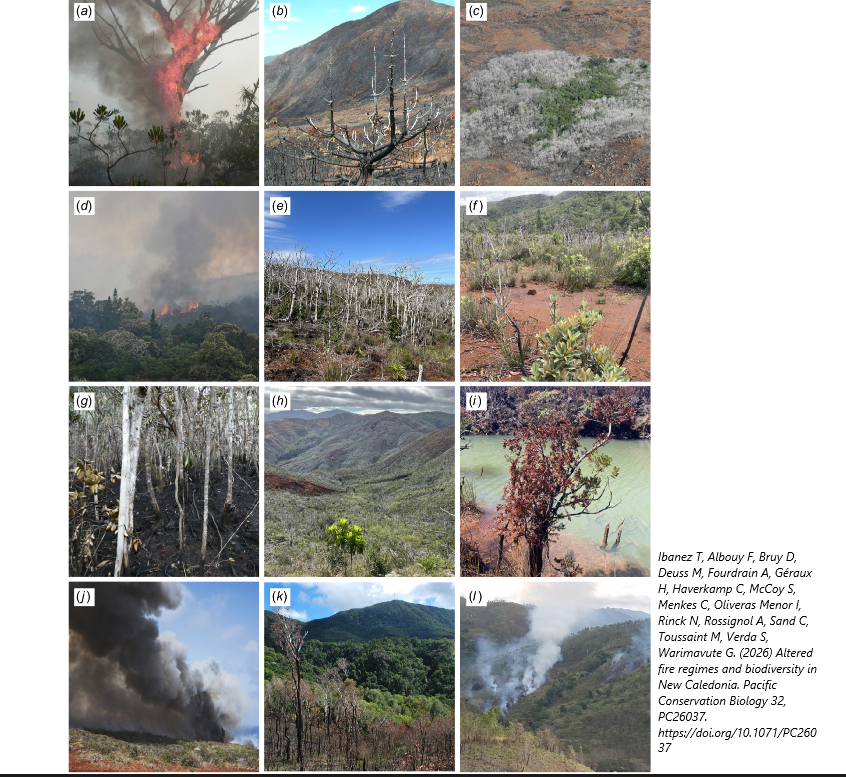
Remote tropical Pacific Islands evolved in long isolation, giving rise to exceptionally unique biodiversity. Beginning with Austronesian settlement in recent millennia and followed by European colonisation in recent centuries, human arrival has profoundly affected these systems, including altered fire regimes. Among these islands, New Caledonia stands out as one of the few tropical archipelagos recognised as a biodiversity hotspot in its own right, harbouring the world’s highest density of endemic species, including more than 2600 vascular plant species and over 135 lizard species. Wildfires have long been identified as a major threat to this biodiversity, yet fire regimes, their drivers, and their impacts on species remain poorly understood. Here, we synthesise current knowledge on fire regimes in New Caledonia, their impacts on biodiversity, and existing fire management policies. Increases in wildfire frequency and extent since human arrival have contributed to widespread degradation of native ecosystems, favouring more pyrophytic vegetation and threatening hundreds of species with extinction. Current management strategies, largely focused on fire bans and emergency response, have proven insufficient to safeguard biodiversity. While strengthening firefighting capacity remains necessary, there is an urgent need to transition toward a more integrated and strategic approach to fire management. Such an approach should be tailored to New Caledonia’s diverse socio-ecological contexts, incorporating traditional fire practices where appropriate and accounting for variability across ecosystems and land-tenure systems. Improved fire monitoring, a better understanding of species-specific vulnerabilities, and inclusive stakeholder engagement are essential to mitigate biodiversity loss and enhance ecosystem resilience under ongoing global change.