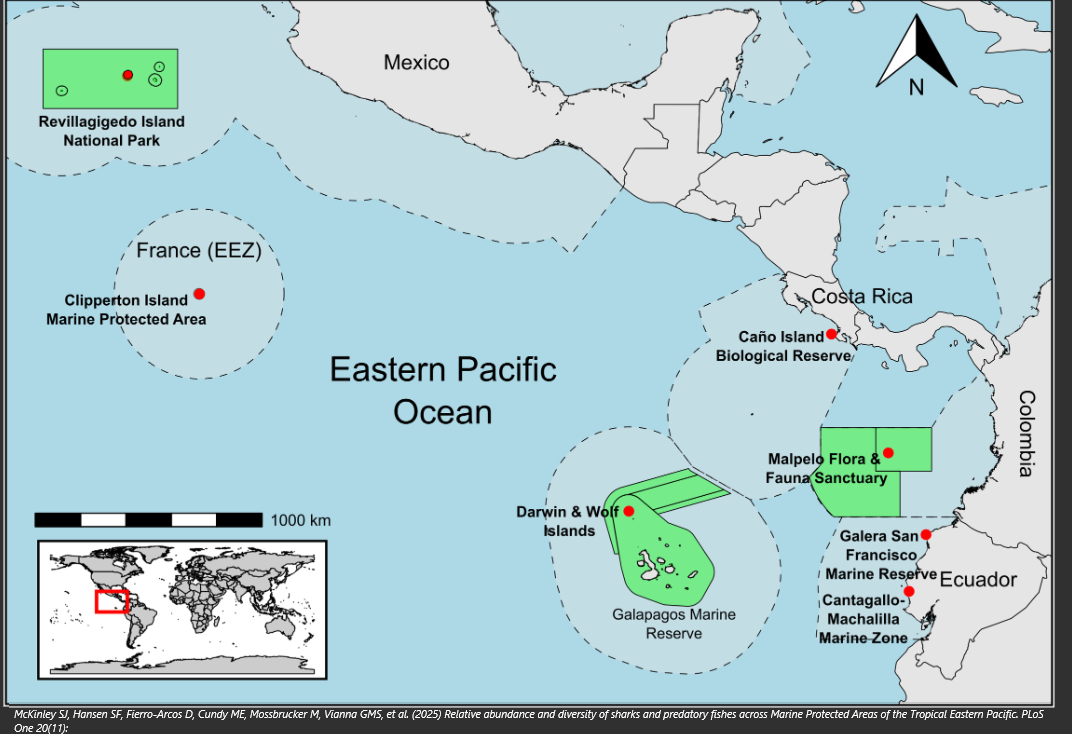
Marine Protected Areas (MPAs) in the Tropical Eastern Pacific (TEP) support globally distinct reef fish populations, which exhibit differences between the remote oceanic islands and continental coast. While oceanic island MPAs typically support large abundances of sharks and large predatory teleost (bony) fishes, coastal MPAs show increasing signs of depletion. We deployed stereo-Baited Remote Underwater Video systems (stereo-BRUVs) to assess reef fish community structure across seven MPAs in the region. Oceanic island MPAs had considerably greater species richness and relative abundances than coastal MPAs across all trophic levels. Within the biogeographic subprovinces, fish assemblages were differentiated from each other corresponding to latitude, aligning with the established patterns and supporting finer scale bioregionalization within the TEP. Notably, oceanic MPAs supported some of the largest relative abundances (MaxN hr-1) of sharks on nearshore reefs reported globally. This is likely driven by the regional oceanographic processes enhancing productivity and trophic diversity and sustained by reduced anthropogenic disturbances associated with MPA remoteness and protection. Therefore, we highlight the critical role of MPAs in the TEP as refuges for sharks. However, we also found evidence of fishing pressure on predatory fishes within MPAs across the region. Coastal MPAs in Ecuador exhibit low fish abundances across all trophic levels, with large predators notably absent, indicative of ‘fishing down the food web’. Our results highlight the need for fishing impact assessments and improved conservation measures, such as strengthened enforcement, within MPAs to conserve globally significant marine biodiversity.