Protected Area targets have been set globally, regionally, and sometimes at a country level. During the last decade, the global protected area targets that all country signatories to the Convention on Biological Diversity (CBD) committed to were the CBD's Aichi Biodiversity Targets. Specifically, Aichi Target 11 which stated that:
at least 17 per cent of terrestrial and inland water, and 10 per cent of coastal and marine areas, especially areas of particular importance for biodiversity and ecosystem services, are conserved through effectively and equitably managed, ecologically representative and well connected systems of protected areas and other effective area-based conservation measures, and integrated into the wider landscapes and seascapes by 2020.
The new Kunming-Montreal Global Biodiversity Framework (GBF) was adopted in December 2022 at the 15th Meeting of the Conference of the Parties to the Convention on Biological Diversity (CBD COP15). CBD country signatories have committed to implementing the protected area target (Target 3) of the new GBF by the year 2030. The text of Target 3 is below:
Ensure and enable that by 2030 at least 30 per cent of terrestrial, inland water, and of coastal and marine areas, especially areas of particular importance for biodiversity and ecosystem functions and services, are effectively conserved and managed through ecologically representative, well-connected and equitably governed systems of protected areas and other effective area-based conservation measures, recognizing indigenous and traditional territories, where applicable, and integrated into wider landscapes, seascapes and the ocean, while ensuring that any sustainable use, where appropriate in such areas, is fully consistent with conservation outcomes, recognizing and respecting the rights of indigenous peoples and local communities including over their traditional territories.
Regionally, the Micronesia Challenge aims to effectively conserve at least 30% of near-shore marine resources and 20% of terrestrial resources across Micronesia by 2020. An example of a country-based target is Fiji that aims to have 30% of reefs protected by 2015 and 30% of waters managed as a marine protected area network by 2020. During the 24th Micronesia Island Forum in 2019, the Leaders recognized the success in the first 15 years of the Micronesia Challenge and endorsed the new Micronesia Challenge 2030 goals to effectively manage 50% of marine resources, including the exclusive economic zone (EEZ), and 30% of terrestrial resources by 2030.
Below are various efforts that have been carried out to assess global and regional progress towards the Aichi protected area targets. The paper by Govan (2009) is the most comprehensive assessment of marine protected areas (MPAs), including all LMMAs in the Pacific Islands. Govan’s data has now been incorporated into the World Database on Protected Areas (WDPA). Several of the papers below attempt to assess progress towards targets which relate to factors such as management effectiveness, biodiversity coverage, governance and finance etc.
As we move closer to 2030, further technical guidance on implementing the new GBF Target 3 that becomes available will be added to the resources section below. Furthermore, the resources section will be updated as needed to include any new papers or guidance related to taking stock of national, regional and global progress in implementing the GBF Target 3.
Reef relief: Scientists map 165,000km² of climate resilient coral
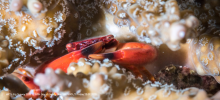
A landmark global study has identified more than 165,000 square kilometres of coral reefs across 71 countries with the strongest potential to survive a warming world – tripling previous estimates and offering a rare note of hope for one of the ocean’s most threatened ecosystems.
Reef restoration shouldn’t just be about growing corals - but also bringing reefs to life, new study suggests
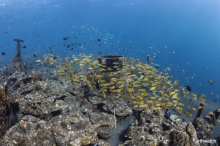
Over the past twenty years, coral reef restoration has seen unprecedented growth worldwide. From Indonesia to the Caribbean, thousands of projects have been launched with the goal of “saving” coral reefs - often by planting coral fragments or building artificial reef structures.
Reef-Fidelity and Migration of Tiger Sharks, Galeocerdo cuvier, across the Coral Sea
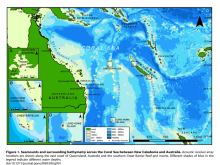
Knowledge of the habitat use and migration patterns of large sharks is important for assessing the effectiveness of large predator Marine Protected Areas (MPAs), vulnerability to fisheries and environmental influences, and management of shark–human interactions.
Regional Marine Protection Priorities, Pacific BioScapes Programme - Fiji, Palau and Vanuatu
The Pacific BioScapes Programme aims to identify and strengthen the management of Key Biodiversity Areas (KBA) in the Pacific region. These areas are 'sites contributing significantly to the global persistence of biodiversity’, in terrestrial, freshwater and marine ecosystems.

Reimmanlok - Marshall Islands' National Conservation Area Plan
Global biodiversity loss is rapid and ongoing. International efforts are redoubling as the international community realizes the importance of biodiversity in maintaining our life support systems.
Relative abundance and diversity of sharks and predatory fishes across Marine Protected Areas of the Tropical Eastern Pacific
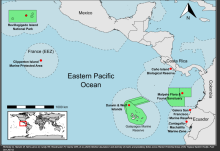
Marine Protected Areas (MPAs) in the Tropical Eastern Pacific (TEP) support globally distinct reef fish populations, which exhibit differences between the remote oceanic islands and continental coast.
Remote sensing delivers tropical forest resilience monitoring for the Global Biodiversity Framework

Tropical forests sustain a disproportionate share of global biodiversity and of nature’s contributions to people, yet they are increasingly destabilized by interacting pressures from climate change, land-use change and intensifying disturbance regimes.
Report for the BIOPAMA PACIFIC REGIONAL INCEPTION WORKSHOP Apia, Samoa 11TH to 15TH June 2018
To formally launch the second phase of the Biodiversity and Protected Areas Management (BIOPAMA) programme, a regional inception workshop for the Pacific was held at the Tanoa Tusitala Hotel, Apia, Samoa from 11th to 15th June 2018.
Report of the annual meeting of the South Pacific whale research consortium, 9th February - 12th February 2009, Auckland, New Zealand
Members of the South Pacific Whale Research Consortium met at the University of Auckland from 8-12 February, 2009 to discuss (i) the results of fieldwork and analysis conducted during 2008 and, (ii) conservation initiatives in the region.
Report of the Third (3rd) South Pacific National Parks & Reserves Conference, Apia, Western Samoa, 24 June - 3 July 1985 : conference report (Vol. 4) : report on conference arrangements
In recognition of the need for National Parks and protected areas in the South Pacific, the New Zealand Government hosted the First South Pacific Conference on National Parks and Reserves in 1975, in association with the South Pacific
Report on the 2016 Funafuti Community-based Ridge-To-Reef (R2R). Rapid biodiversity assessment of the conservation status of biodiversity and ecosystem services (BES) in Tuvalu.
This report presents the results of the 2016 Funafuti Community-Based Ridge-to-Reef (R2R) Rapid Biodiversity Assessment (BIORAP) of biodiversity and ecosystem services (BES), hereafter referred to as the BIORAP.
Reptiles and Amphibians of the Trans-Fly Region, New Guinea
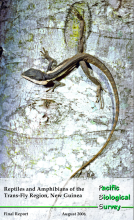
There are 102 species of reptiles and 25 species of frogs known from the Trans-fly region. 29 of the reptiles and one of the frogs are of special conservation concern. Seven of these species are of high conservation concern: 2 turtles, a monitor lizard, three snakes, and one frog.
Republic of Fiji National Ocean Policy 2020-2030
Fijians have been at the forefront of ocean action and leadership because it i our responsibility as an oceanic people. Fiji is a nation of over 300 islands whose past, present and future are intrinsically linked to the ocean.
Reshaping Natural Resource Management in Papua New Guinea
The growing need for effective tools and new approaches for natural resource management (NRM) is being met by PNG’s NRM Hub initiative, which is already helping to centralise environmental data and make it accessible to stakeholders everywhere.
Responsible marine wildlife viewing guidelines: a guide to industry best practice for viewing marine wildlife in the Pacific.
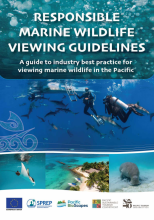
This guideline provides practical, science-based information for tourism operators and tourism regulators who want to offer the best possible experience to their customers, while conserving species and habitats and making a positive contribution to local communities.
Restoration by HER: Gender-responsive approaches to ecosystem restoration across global landscapes
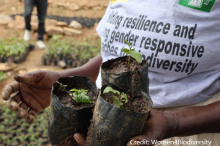
Ecosystem restoration is recognised as a key strategy for confronting the dual crises of climate change and biodiversity loss. The United Nations Decade on Ecosystem Restoration (2021-2030)1 sets an ambitious agenda to restore degraded ecosystems worldwide (FAO et al., 2021).
Retaining natural vegetation to safeguard biodiversity and humanity
Global efforts to deliver internationally agreed goals to reduce carbon emissions, halt biodiversity loss, and retain essential ecosystem services have been poorly integrated.
Rethinking the 30 by 30 target to ensure the well-being of small-scale fishing communities

Target 3 of the Convention on Biological Diversity’s (CBD) Kunming-Montreal Global Biodiversity Framework calls for the protection of 30% of terrestrial areas, inland waters, and marine and coastal areas through area-based conservation (protected areas and other effective conservation measures) b
Revenues for Nature Guidebook Series Nature-based Models for Unlocking Private Investment into Freshwater (Expanded Edition)
The R4N Guidebook Series provides an in-depth analysis of models across the globe that unlock private sector capital into nature restoration or protection, including nature-based solutions (NbS).
Review of Cetacean Diversity Status and Threats in the Pacific Island Region
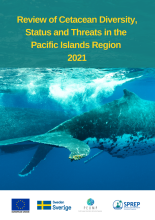
This report brings together information on the status of and threats to whales and dolphins in the Pacific Islands region.
Review of legislation, policies, strategies and plans relating to the development of marine protected areas in Fiji
Fiji is committed to the sustainable use of its marine resources and conserving its marine biodiversity. This commitment has been ratified through Fiji’s international responsibilities and obligations under the United Nations Convention on Biological Diversity (UNCBD).
Review of natural resource and environment related legislation : Cook Islands
Environment related legislation reviewAvailable onlineCall Number: [EL]Physical Description: 20 p. ; 29 cm
Rights of Nature: Perspectives for Global Ocean Stewardship
The development of a new international legally binding instrument for the conservation and sustainable use of marine biodiversity beyond national jurisdiction (BBNJ agreement) is in the final negotiation phase.
Rodent Control Manual : A Practical Guide for Rodent Control for Communities and Technicians Working in Samoa
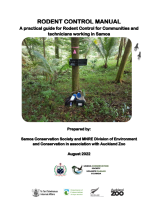
The purpose o the manual is provide practical guidance to technicians attempting to plan and control rodents (rats and mice) using poison baiting for biodiversity conservation purposes under Samoan forest conditions.
Rubble in paradise: motile infaunal diversity patterns across reef environments in Palau
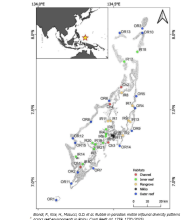
Assessments of coral reef biodiversity generally focus on corals and fishes, although there is a variety of other taxa that live within the structure of coral reefs.
Safeguarding Seafood Security, Marine Biodiversity and Threatened Species: Can We Have Our Fish and Eat It too?
The ocean contains an abundance of biodiversity that is vital to global food security. However, marine biodiversity is declining.
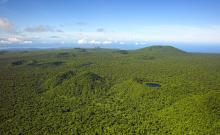
Saving the ocean and climate through innovative marine protected area finance mechanisms
Ocean threats: acidification, deoxygenation, warming, heatwaves. Do we have anything useful to bend, change, or reverse the results?
Scaling Up Conservation in a Connected World

Our planet is facing an unprecedented and accelerating biodiversity crisis, driven by human activity and compounded by climate change, which is bringing ever more severe weather to a world already strained by poverty and inequality.
Scaling Up: Conservation in a Connected World
Our planet is facing an unprecedented and accelerating biodiversity crisis, driven by human activity and compounded by climate change, which is bringing ever more severe weather to a world already strained by poverty and inequality.
Scheduling incremental actions to build a comprehensive national protected area network for Papua New Guinea
Systematic conservation planning identifies priority areas to cost-effectively meet conservation targets. Yet, these tools rarely guide wholesale declaration of reserve systems in a single time step due to financial and implementation constraints.

Seed-dispersing animals are in decline, impacting forests and the climate: Study
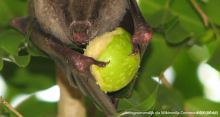
A lot of attention has been paid to the decrease in bee populations and other pollinators, but a recent review article makes the case that we should be equally alarmed by the declining numbers of seed-dispersing animals, which are crucial for growing healthy forests.
Sepik Wetlands Management Initiative, Papua New Guinea
The Sepik River is the longest river on the island of New Guinea. The majority of the river flows through the Papua New Guinea provinces of Sandaun and East Sepik, with a small section flowing through the Indonesian province of Papua.
Setting priorities for marine conservation in the Fiji Islands Marine Ecoregion
The Fiji Islands Marine Eco region which includes our coastal, Inshore and offshore marine environment is rich in marine biodiversity and endemism.
Severe and widespread coral reef damage during the 2014-2017 Global Coral Bleaching Event

Ocean warming is increasing the frequency, extent, and severity of tropical-coral bleaching and mortality. During 2014–2017, marine heatwaves caused the Third Global Coral Bleaching Event. We analyze data from 15,066 reef surveys globally during 2014–2017.

Sharks and rays of the Samoan archipelago: a review of their biological diversity, social and cultural values, and conservation status
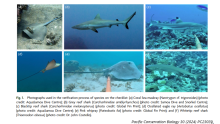
Data on chondrichthyan (sharks, rays, and chimaeras) populations is largely lacking for many countries and territories in the Indo-Pacific. Aims.
Sharks, Rays, and MPAs: A Global Assessment of Marine Protected Area Coverage in National Waters Across Species Ranges

Global conservation agreements emphasize protected area coverage targets, such as the Kunming–Montreal Global Biodiversity Framework's 30 × 30 target, yet their effectiveness in safeguarding biodiversity remains uncertain.
Siporae Rainforest Conservation Area - Management Rules
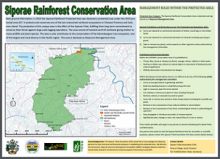
In 2019 the Siporae Rainforest Protected Area was declared a protected area under the 2010 protected area ACT. It protects and conserves one of the last untouched rainforest ecosystems in Choiseul Province and Solomon Island.
Sirebe Rainforest Conservation Area - Management Rules
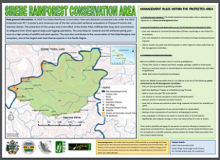
In 2019 The Sirebe Rainforest Conservation Area was declared a protected area under the 2010 protected area ACT. It protects and conserves one of the last untouched rainforest ecosystems in Choiseul Province and Solomon Islands.
Six key policy recommendations to advocate for marine conservation that matches the ocean’s dynamism
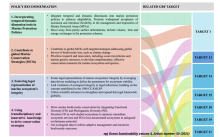
Marine ecosystems face threats from human-induced stressors like climate change, pollution, and habitat loss. Despite international endeavors, significant gaps remain in understanding ocean dynamics.
Social Assessment for Protected and Conserved Areas (SAPA) - 2nd Edition
In April 2013, IIED in partnership with Fauna and Flora International (FFI) and the UN Environment World Conservation Monitoring Centre (UNEP-WCMC), launched a project to develop and pilot the Social Assessment for Protected Areas methodology (SAPA).
Social Assessment for Protected Areas (SAPA)
This manual provides detailed guidance for assessing the social impacts – benefits and costs – of protected areas (PAs) and related conservation and development activities, at the local level using the relatively simple and low cost Social Assessment for Protected Areas (SAPA) methodology.
Social implications of the 30×30 global conservation target
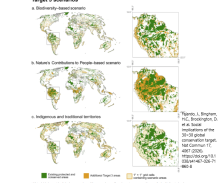
Target 3 of the Kunming-Montreal Global Biodiversity Framework aims to increase global protected and conserved area coverage to at least 30% by 2030.
Social implications of the 30×30 global conservation target
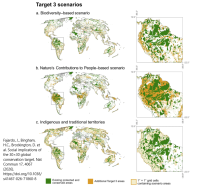
Target 3 of the Kunming-Montreal Global Biodiversity Framework aims to increase global protected and conserved area coverage to at least 30% by 2030. The impact on people, whether positive or negative, will depend on the social context of additional areas and how they are governed and managed.
Socio-environmental movements emerge as key global guardians of biodiversity amid rising violence

A new study published in the Proceedings of the National Academy of Sciences reveals that organized civil society and social mobilization are key, yet often unrecognized, agents of global biodiversity conservation.